
Plant Growth and Physiology and Environmental Adaptation
Almost every organism is exposed to variation in temperature, on a daily and on a seasonal basis. This is especially true for plants that, as sessile organisms, need to continuously alter their growth, development, and physiology in response to temperature variation. To sense and respond to temperature changes, several molecular sensors and downstream signalling and response networks have evolved. Although our understanding of temperature perception and response in plants has increased in recent years, we still know relatively little about the cellular signalling cascades in response to temperature variation.
Thermomorphogenesis
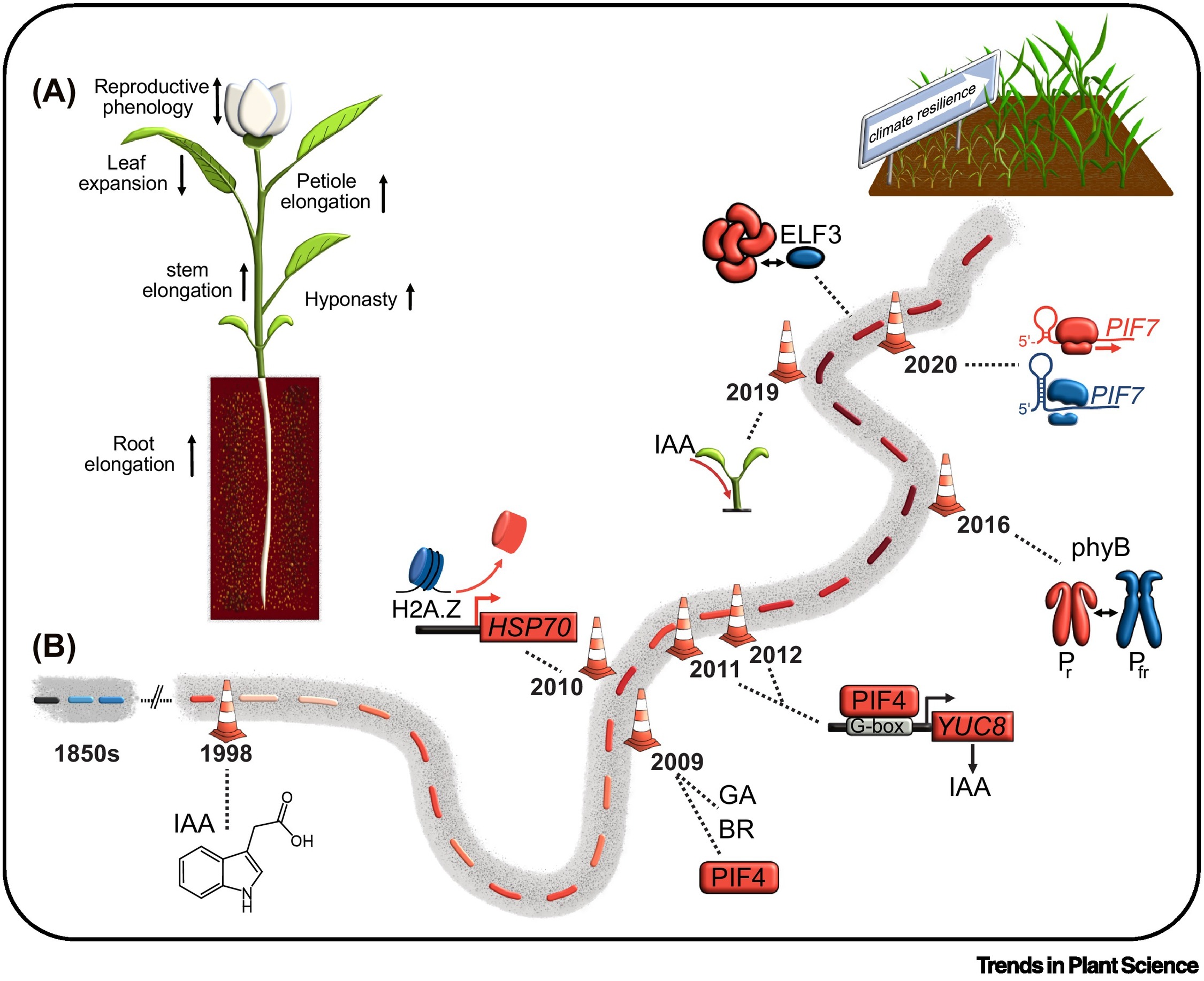
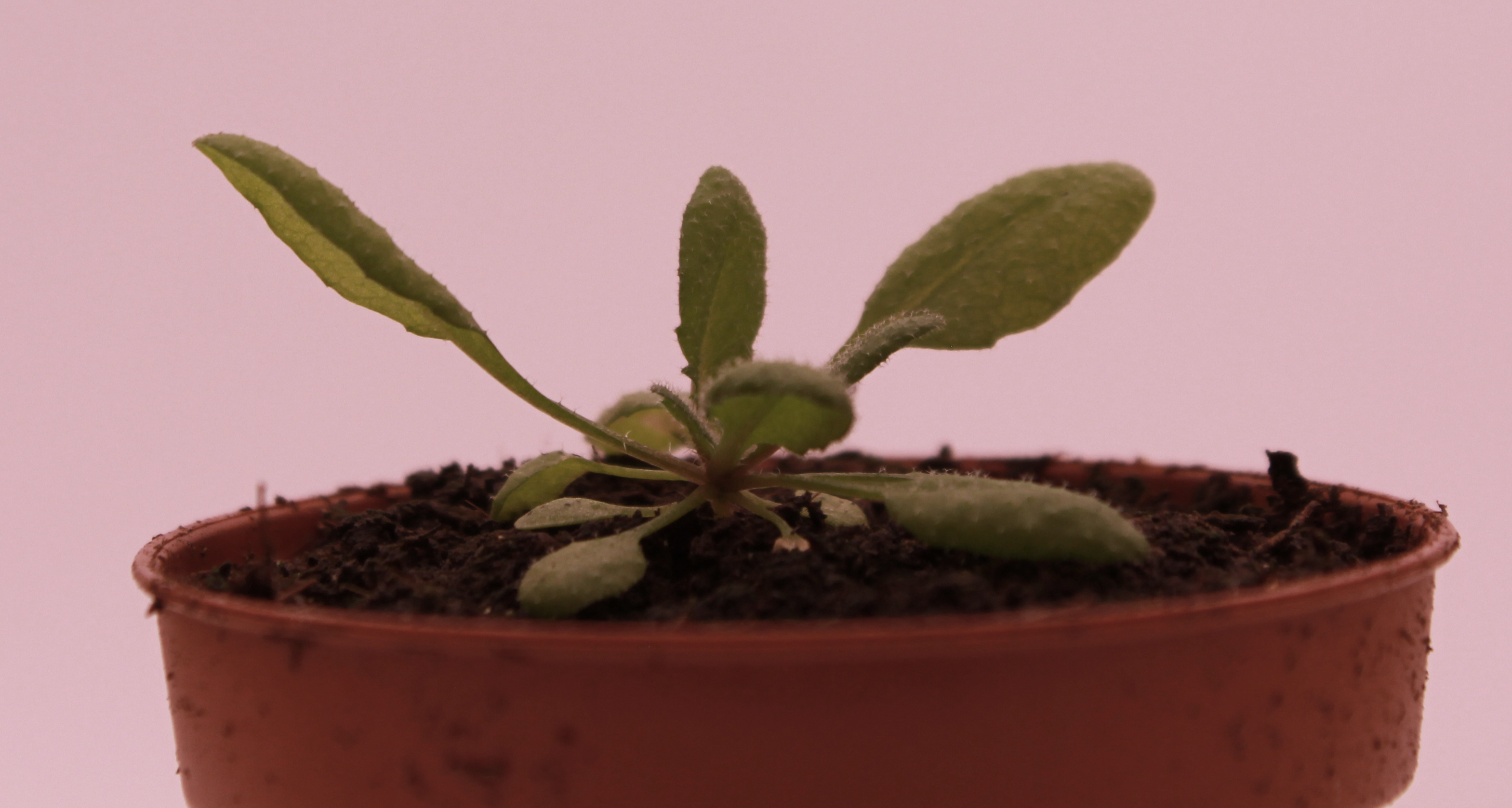
Plants continuously adjust their architecture to changes in ambient temperature. We investigate how plants perceive warm temperatures and translate these signals into developmental responses such as stem elongation, leaf positioning, and altered growth patterns. By uncovering the signaling pathways that connect temperature sensing to growth regulation, we aim to understand how plants adapt to a warming climate and identify targets for improving crop resilience.
TEAM: Hongyan Liu, Yajie Zhang
Stomatal Dynamics and Plant Water Use
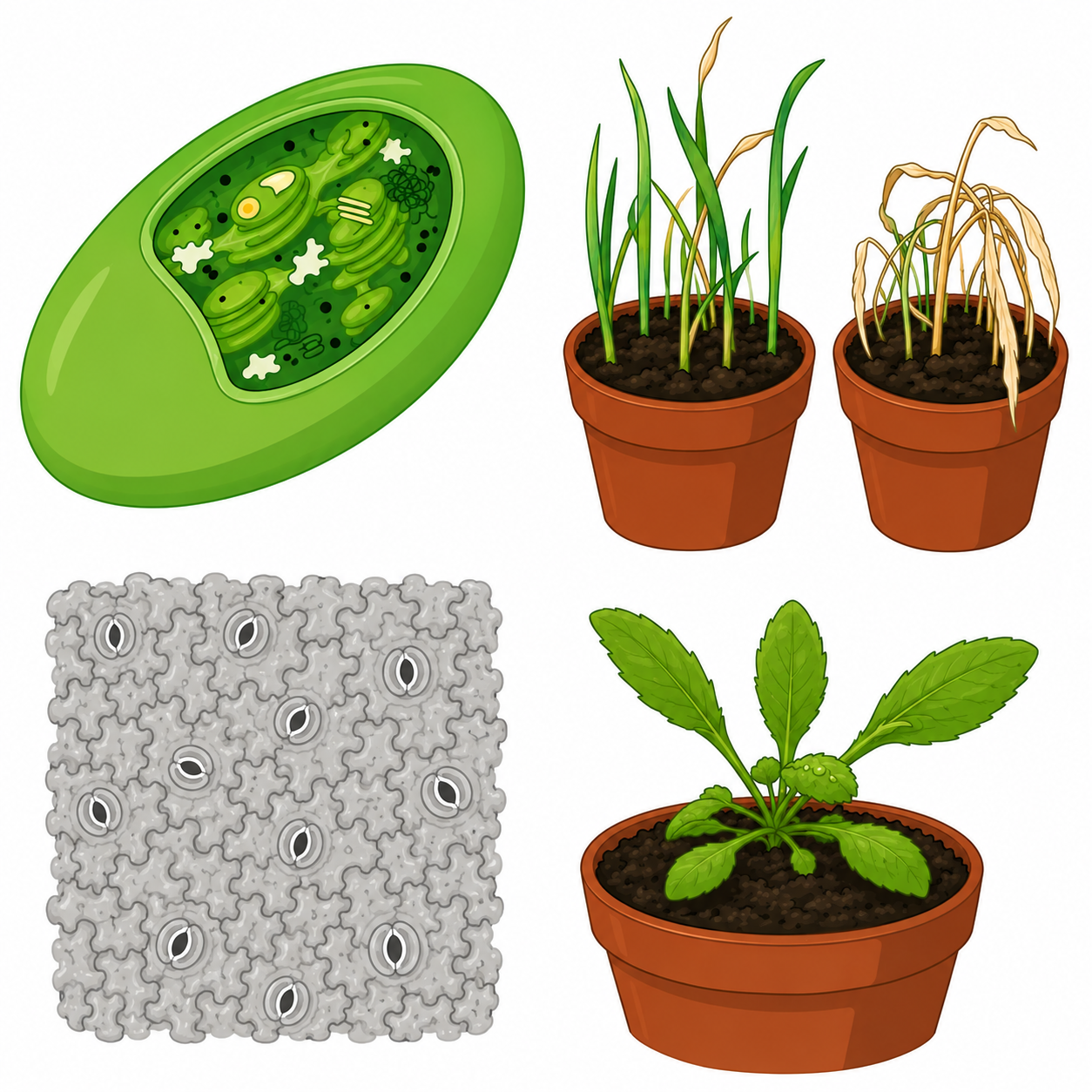
Stomata regulate the exchange of gases and water between plants and the atmosphere. We study how environmental signals, including temperature and drought, control stomatal opening and closure. Understanding these mechanisms is crucial for improving water-use efficiency, photosynthetic performance, leaf cooling, and stress tolerance in crops facing increasingly variable environmental conditions.
TEAM: Shao-Li Yang, Llorenç Gibanel Velasco, Wannes Weyts
Photosynthesis Under Environmental Stress
Photosynthesis is highly sensitive to environmental fluctuations. We investigate how heat stress and other abiotic factors influence photosynthetic efficiency and how plants maintain productivity under challenging conditions. Our goal is to identify the molecular processes that protect photosynthetic machinery and support sustainable crop performance in future climates.
TEAM: Roberto Espinoza Corral (team lead), Lucy Geisen
Heat Stress Tolerance and Climate Resilience
Extreme temperatur events increasingly threaten plant productivity worldwide. We study the molecular and physiological mechanisms that enable plants to survive and recover from cold and heat stress, with particular attention to signaling networks, protein regulation, and acclimation responses. Insights from this work contribute to the development of climate-resilient crops.
TEAM: Tingting Zhu, Božena Klodová, Yajie Zhang, Llorenç Gibanel Velasco
Key Publications:
Stomatal opening under high temperatures is controlled by the OST1-regulated TOT3-AHA1 module.
Xu X, Liu H, Praat M, Pizzio GA, Jiang Z, Driever SM, Wang R, Van De Cotte B, Villers SLY, Gevaert K, Leonhardt N, Nelissen H, Kinoshita T, Vanneste S, Rodriguez PL, van Zanten M, Vu LD, De Smet I.
Nature Plants. 2025 Jan;11(1):105-117.
Zhu S, Pan L, Vu LD, Xu X, Orosa-Puente B, Zhu T, Neyt P, van de Cotte B, Jacobs TB, Gendron JM, Spoel SH, Gevaert K, De Smet I.
New Phytologist. 2024 Jan;241(2):687-702.
The membrane-localized protein kinase MAP4K4/TOT3 regulates thermomorphogenesis.
Vu LD, Xu X, Zhu T, Pan L, van Zanten M, de Jong D, Wang Y, Vanremoortele T, Locke AM, van de Cotte B, De Winne N, Stes E, Russinova E, De Jaeger G, Van Damme D, Uauy C, Gevaert K, De Smet I.
Nature Communications. 2021 May 14;12(1):2842.
Warm temperature triggers JOX and ST2A-mediated jasmonate catabolism to promote plant growth.
Zhu T, Herrfurth C, Xin M, Savchenko T, Feussner I, Goossens A, De Smet I.
Nature Communications. 2021 Aug 10;12(1):4804.